Hello, I’m Wendy
I hand-dye small batches of yarn in my Midlothian studio, inspired by Scotland’s landscapes, history and folklore.
Teaching history has shaped the heart of Thistle Yarns. I’ve spent years bringing the past to life through stories, and that same curiosity finds its way into every colourway: a landscape, a life from the past, or an everyday moment can be the beginning of a skein.
My nana taught me to knit and crochet as a child. That love of making still guides my work. I enjoy creating colour for people to turn into something of their own, from a pair of socks to a much-loved shawl.
Small batches give each colourway its own character. Every skein varies naturally, so choose enough for your project and alternate skeins when working on a larger piece.
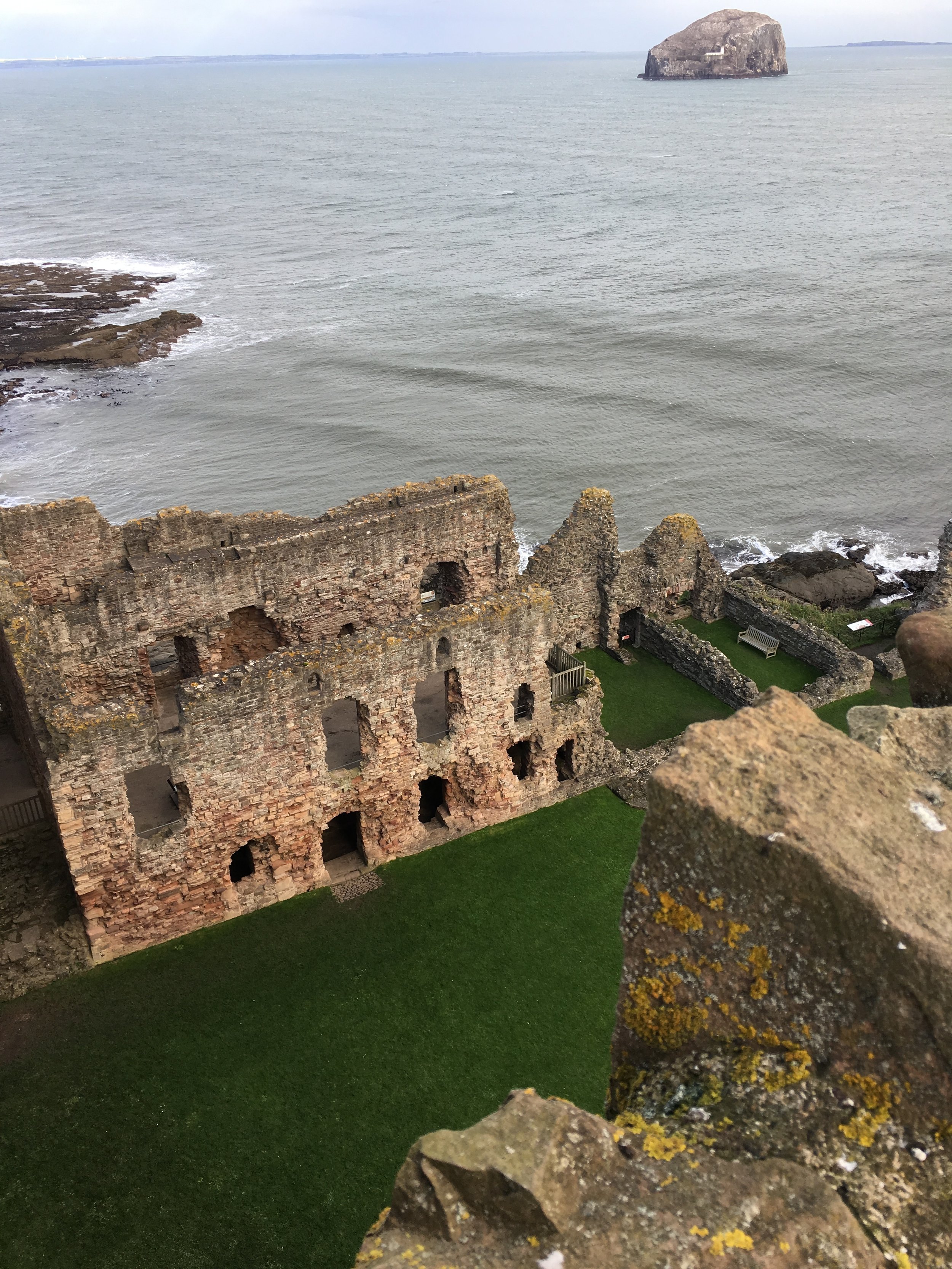
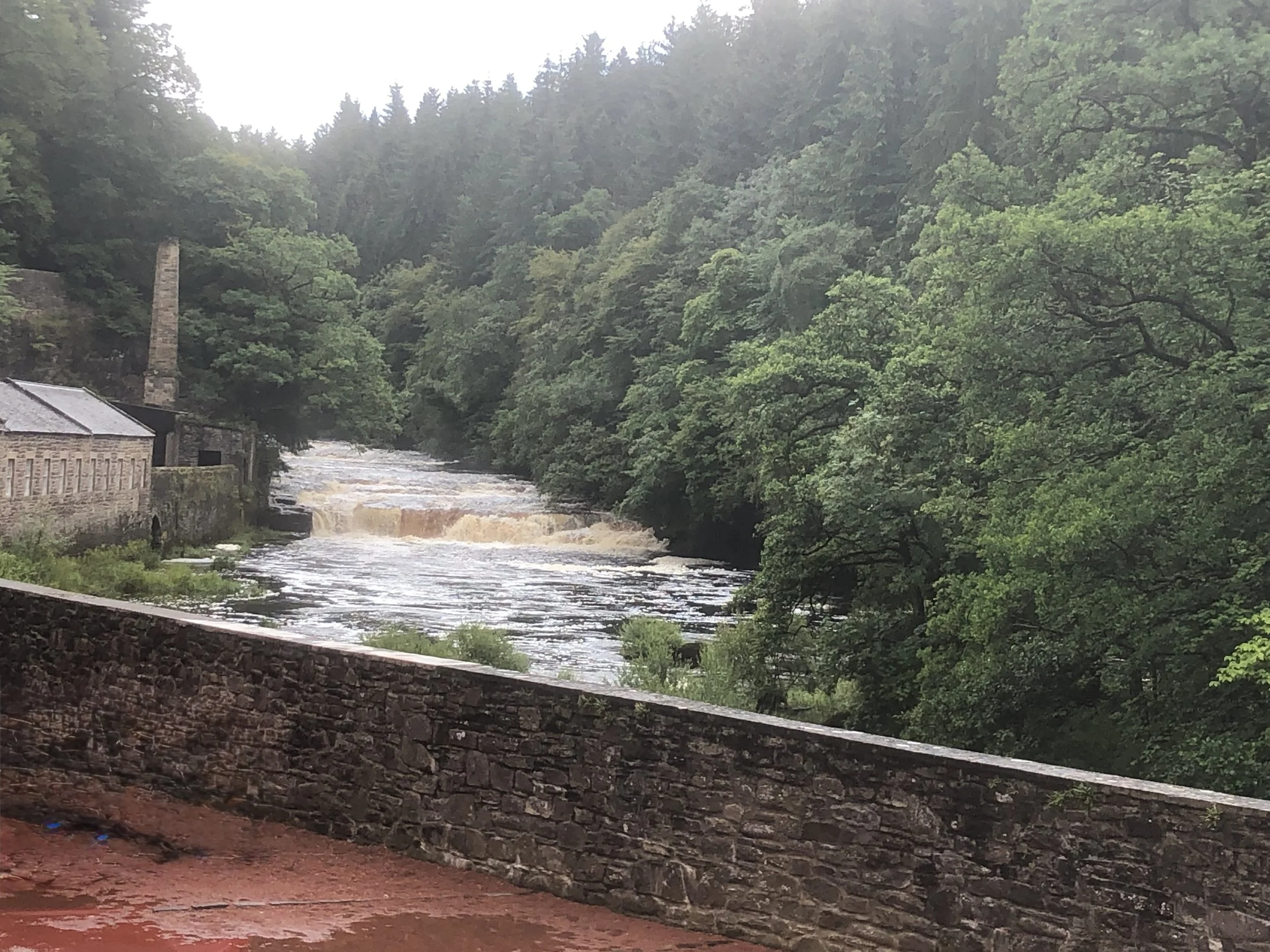
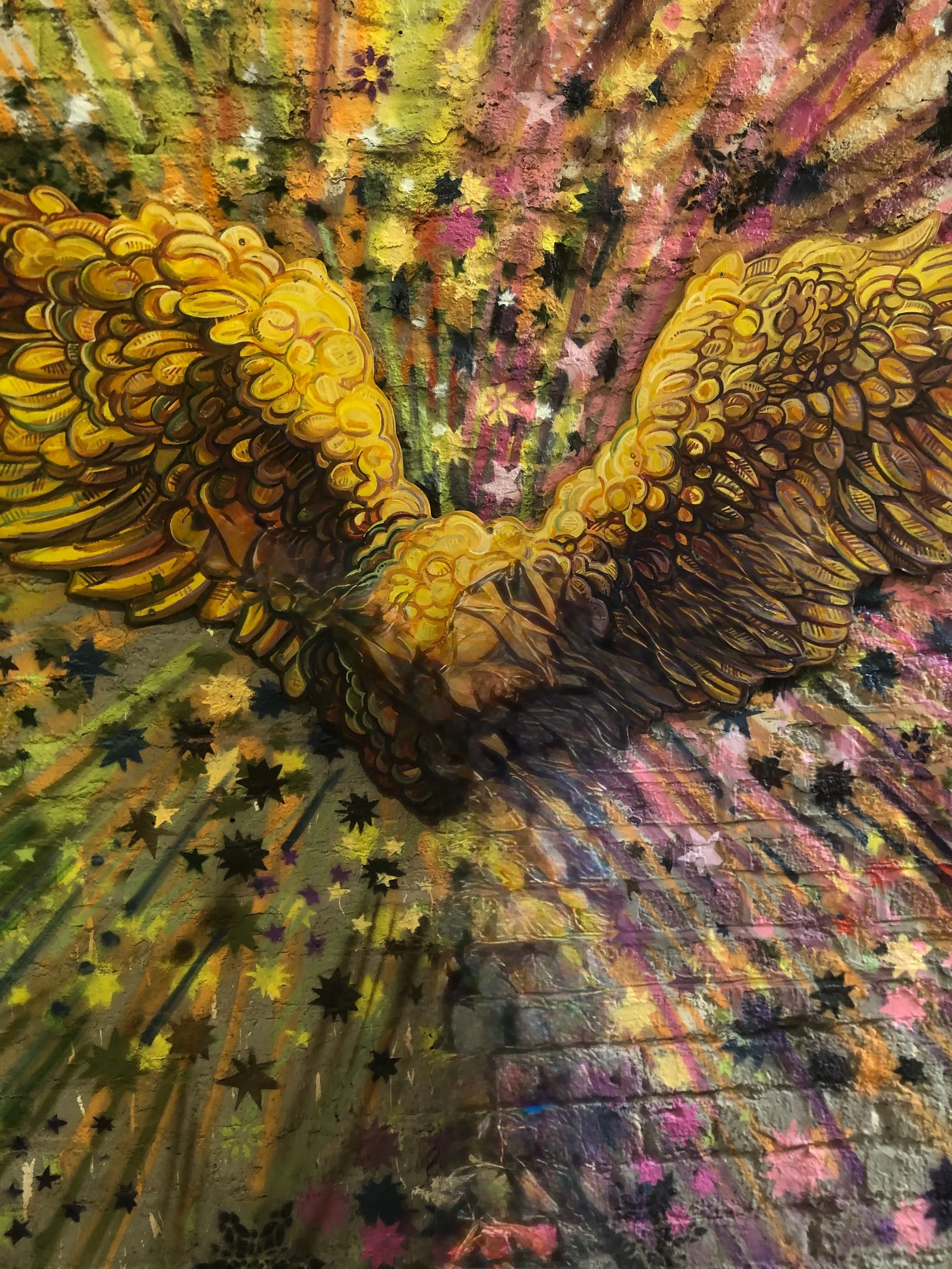
At the heart of it all, I believe yarn is more than just material. It carries meaning. It connects people. It tells stories. Every skein I create is shaped by my values: sustainability, inclusivity, and a love of colour and heritage. My hope is that when you work with Thistle Yarns, you feel that care and intention in every stitch.
Scottish stories, hand-dyed by Wendy
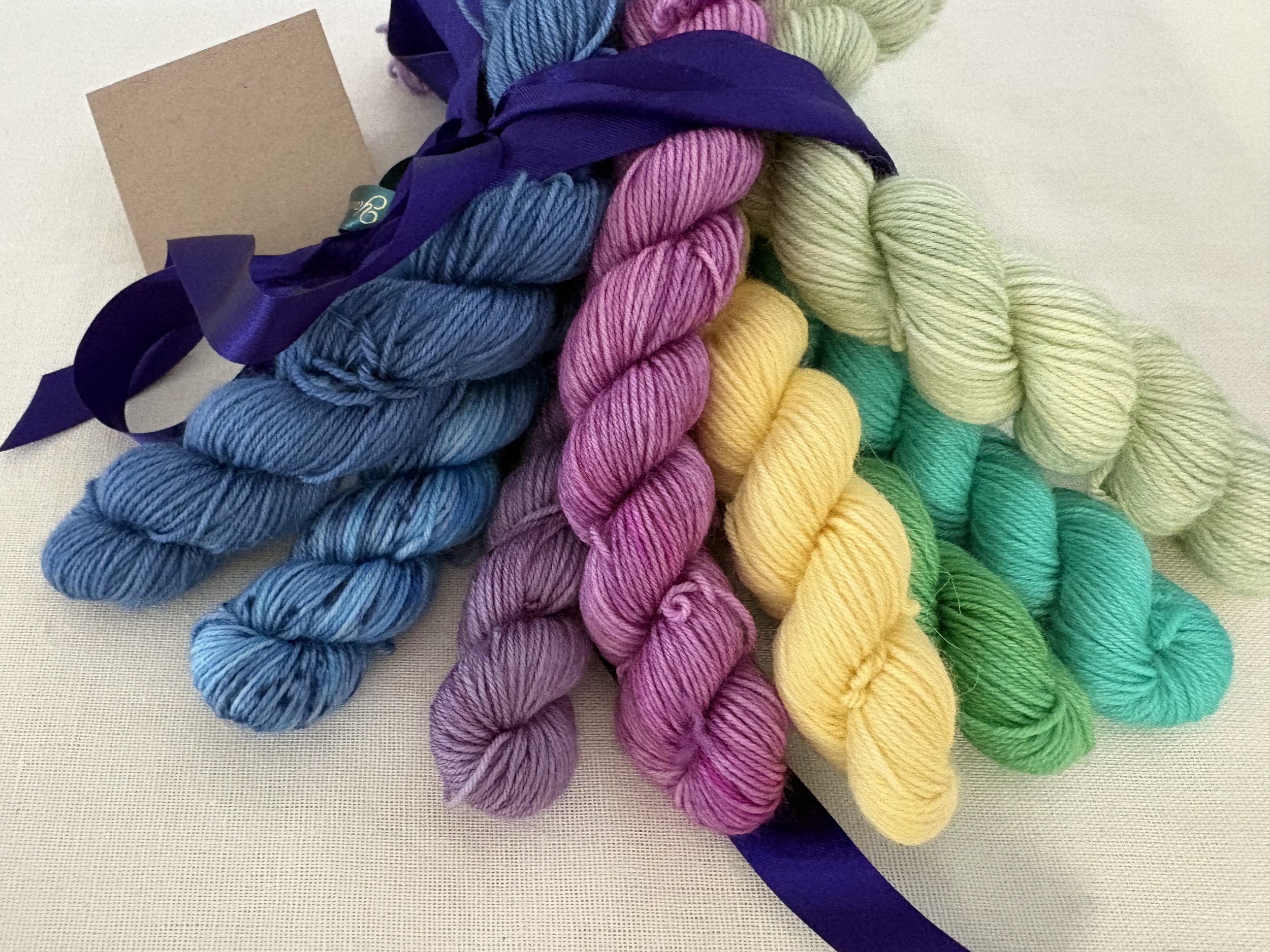
Choosing a yarn for the way you make
The shop includes wool and alpaca yarns as well as merino blends with nylon. Different projects need different qualities: softness, drape, warmth or extra durability.
I value thoughtful fibre choices and clear information. Check each product’s fibre content, skein weight and meterage before choosing. Some yarns are superwash-treated, but gentle hand washing is my recommended way to care for hand-dyed colour.
The Renewal Collection gives saved dyes and end-of-run colour another use, creating individual colourways and bundles.
Let’s talk yarn
Need help choosing a base, pairing colours or working out quantities? Tell me about your project and I’ll help you explore the options.